
he border between Wales and England is not just a line on a map;it's a living seam where two histories rub against each other. Drive west from Shrewsbury on the A5 and you'll notice it before any sign: the road narrows。
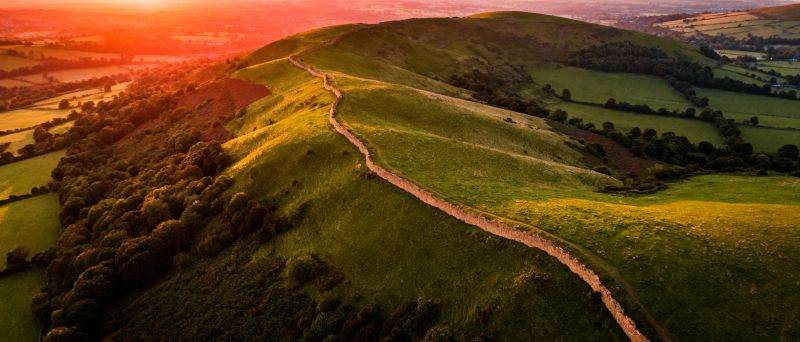
the hedgerows thicken, and the place names shift from tidy English syllables to something older, more guttural. Offa's Dyke, that eighth-century earthwork, still snakes through the landscape for 177 miles, a reminder that this divide was once a matter of life and death. Today it's a walking trail, but the ground itself holds the memory of fortification.Language tells the story more honestly than any treaty. In Wrexham or Carmarthen, you'll hear Welsh spoken in cafés and playgrounds—a living tongue that refuses to be a museum piece. Cross into Chester or Hereford, and the soundscape flips entirely. Yet the influence runs both ways: English accents along the border carry a Welsh lilt, and Welsh learners in Shropshire are surprisingly common. I once met a farmer near Hay-on-Wye who switched between the two languages mid-sentence without a pause, as if flipping a switch. That kind of fluidity is rarely captured in official statistics。but it's the reality on the ground.Economically, the relationship is lopsided in ways that sting. Wales exports water to England—a fact that grates when reservoirs run low in dry summers. The Welsh NHS receives less per head than its English counterpart, a gap that politicians in Cardiff Bay have long complained about. Then there's the matter of second homes: English buyers snapping up cottages in Eryri (Snowdonia) and the Llŷn Peninsula, driving prices beyond what local wages can bear. You see the tension in villages where half the windows stay dark through winter. It's not personal hostility—more a quiet resentment about power and resources flowing eastward.Sport provides the most visible theatre for this rivalry. When Wales and England meet at rugby's Principality Stadium, the air crackles. I've stood in the stands as 74,000 voices belted out 'Hen Wlad Fy Nhadau'—the roof closed, the sound trapped and amplified until it felt like a physical force. England fans。to their credit, respond with 'Swing Low, Sweet Chariot,' but it's a different energy: confident, perhaps a little complacent. The results don't always follow the script. Wales has won four Six Nations Grand Slams since 2005;
England has won two. For a country of just over three million people, that's not luck—it's something deeper, a refusal to be the smaller neighbour.What strikes me most, though, is how much of this borderland feels neither fully Welsh nor fully English. Towns like Ludlow and Monmouth share architectural DNA—half-timbered fronts, medieval street plans—and a stubborn independence from both Cardiff and London. The Offa's Dyke Path attracts walkers who start in one country and finish in the other without ceremony. Maybe that's the healthiest way to see Wales and England: not as rivals locked in ancient grievance, but as neighbours who have learned。imperfectly, to share a garden. The fence is still there—but people climb over it all the time.